
Mazatec shamanism is an ancient spiritual practice from the Sierra Mazateca region in Oaxaca, Mexico. Central to this tradition is the ceremonial use of psilocybin mushrooms, known as "holy children", which are seen as conscious, sacred beings. These mushrooms play a key role in healing, divination, and spiritual connection, guided by shamans who lead rituals blending indigenous and Christian influences.
Key points from the article:
- Psilocybin Mushrooms: Treated as spiritual entities, they are used in rituals for healing and divine communication. Harvesting follows strict rituals, often involving children during specific lunar phases.
- Velada Ceremony: A night-long spiritual ritual led by a shaman, involving prayers, chants, and sacred preparations to guide participants through visions and healing.
- Historical Context: Mushroom ceremonies predate colonization but adapted under Spanish rule by incorporating Christian symbols to preserve the practice.
- María Sabina’s Influence: This Mazatec healer shared her knowledge with outsiders, sparking global interest but also leading to concerns about misuse and cultural exploitation.
- Modern Challenges: Overharvesting, commercialization, and psychedelic tourism threaten the sacred practices and mushroom ecosystems.
- Global Integration: Organizations like PsiloVibe Church aim to honor these traditions by offering psilocybin ceremonies in structured, respectful contexts.
Mazatec shamanism offers a deeply spiritual approach to psilocybin use, emphasizing respect, preparation, and community. However, the growing global interest raises ethical and ecological concerns, highlighting the need for responsible engagement with these practices.
Psilocybin: "The Holy Children" of the Mazatec People with Doña Eugenia Casimiro & Miguel Mendez
Historical Roots of Psilocybin Use in Mazatec Spirituality
The use of psilocybin mushrooms in Mazatec spirituality stretches back thousands of years, deeply rooted in the traditions of ancient Mesoamerican cultures. Despite the upheavals of colonization and the pressures of a globalized world, these practices have managed to preserve their essence – a focus on healing and forging divine connections. Let’s delve into these historical origins, starting with their pre-Columbian roots.
Pre-Columbian Origins of Psilocybin Rituals
Archaeological discoveries reveal that psilocybin mushrooms held a sacred place in Mesoamerican societies long before European contact. For instance, mushroom-shaped stone carvings found in Guatemala and Mexico date as far back as 1000 BCE. These artifacts highlight the deep reverence ancient communities had for these fungi.
In the Mazatec worldview of the pre-Columbian era, psilocybin mushrooms were seen as spiritual messengers, bridging the gap between humans, ancestors, and nature spirits. They were treated as sacred allies, requiring meticulous preparation and ceremonial care.
The timing of mushroom ceremonies was intricately linked to natural cycles, often coinciding with the rainy season. This alignment underscored the Mazatec belief in the interconnectedness of life, agricultural rhythms, and lunar phases, all central to their cosmology.
How Colonialism Changed Mazatec Traditions
The arrival of Spanish colonizers in the 16th century profoundly impacted indigenous spiritual practices. Catholic missionaries and colonial authorities viewed mushroom ceremonies as incompatible with Christian teachings, leading to their suppression. In response, Mazatec practitioners adapted by conducting rituals in secrecy, using coded language, and blending Catholic imagery with their indigenous rites.
This fusion created a unique spiritual hybrid that endures today. Modern Mazatec ceremonies often incorporate Christian symbols like the Virgin of Guadalupe, Jesus Christ, and Catholic saints, alongside traditional nature spirits. By intertwining Christian prayers with ancient rituals, shamans crafted a protective layer that allowed their spiritual practices to survive.
| Pre-Colonial Practice | Post-Colonial Adaptation |
|---|---|
| Open, community-based ceremonies | Hidden, private rituals |
| Purely indigenous prayers | A mix of indigenous and Catholic invocations |
| Exclusive focus on nature spirits | Inclusion of Catholic saints alongside ancestral beings |
| Daytime public rituals | Nighttime ceremonies in secluded settings |
Through oral traditions and careful preservation, the Mazatec ensured that the sacred protocols of psilocybin ceremonies were passed down, even under the weight of colonial suppression.
María Sabina and the Modern Psilocybin Movement
Despite centuries of cultural suppression, Mazatec traditions found a modern revival, largely due to the influence of María Sabina. This legendary curandera from Huautla de Jiménez, Oaxaca, played a pivotal role in bringing these ancient practices to global attention. Her spiritually grounded approach to psilocybin ceremonies provided a model for ethical and respectful use.
María Sabina’s work reached a wider audience when she shared her rituals with Western visitors, including ethnomycologist R. Gordon Wasson. This interaction marked a turning point in the history of psychedelics. However, it also brought unforeseen challenges, such as cultural appropriation, the loss of ritual secrecy, and an influx of psychedelic tourism that disrupted local communities and commercialized what were once deeply spiritual practices.
Despite these difficulties, María Sabina’s legacy continues to resonate. Her approach emphasized respect and spirituality, reminding us that psilocybin mushrooms are more than just chemical substances – they are tools for profound spiritual exploration. Her work has inspired contemporary organizations, such as PsiloVibe Church, to honor these traditions by emphasizing reverence and proper ceremonial contexts for psilocybin’s use. Her story serves as a powerful reminder of the deep spiritual significance these practices hold.
Healing and Spiritual Uses of Sacred Mushrooms
For the Mazatec people, psilocybin mushrooms are more than just plants – they are sacred tools for healing and spiritual connection. These mushrooms are seen as bridges between the human and divine, offering guidance, renewal, and wisdom through ceremonies steeped in tradition. At the center of these practices lies the profound ritual known as the velada.
The Velada Ceremony: A Sacred Healing Ritual
The velada is the cornerstone of Mazatec healing, a deeply spiritual, night-long ceremony led by a shaman. Every detail of the ritual is carefully prepared to create a sacred space. Candles, copal incense, and Catholic icons are arranged to honor both indigenous and Christian spiritual traditions, reflecting the unique blend of beliefs in Mazatec culture. The mushrooms, given in pairs to symbolize balance and unity, are central to the ritual.
Participants prepare for the velada with ritual cleansings, or limpias, which include abstaining from certain foods, drinks, and activities. This preparation ensures they approach the ceremony with respect and spiritual readiness. Once the velada begins, the shaman leads with prayers, chants, and ritual language, invoking spiritual entities from both indigenous and Catholic traditions. These vocalizations are believed to activate the mushrooms’ power and guide participants’ intentions, opening a pathway to divine communication.
The mushrooms are consumed fresh and only during their natural growing season, emphasizing respect for nature’s rhythms. As the psilocybin takes effect, participants experience visions and receive spiritual insights, guided throughout by the shaman. This carefully structured ritual highlights the shaman’s essential role in interpreting these sacred experiences.
Mushrooms as Living Spiritual Beings
In Mazatec belief, psilocybin mushrooms are not merely plants or chemical substances – they are sentient, conscious beings. Consuming them is seen as entering into a relationship with these spiritual entities, who willingly share their wisdom during the ceremony. This perspective shapes every aspect of the ritual, from the preparation to the way the mushrooms are consumed.
The mushrooms act as intermediaries between humans and the divine. They reveal hidden truths, offer guidance, and facilitate healing through their spiritual presence. In some cases, they are referred to as "the blood of Christ" or gifts from supernatural beings, reflecting the fusion of indigenous spirituality with Catholic influences. This sacred status demands that every interaction with the mushrooms be conducted with deep reverence and adherence to ritual protocols.
The Shaman’s Role in Healing and Guidance
The Mazatec shaman, or chjota chijne, is the heart of the velada, serving as both healer and guide. Years of apprenticeship prepare them for this role, during which they master ritual language, plant knowledge, and the ethical responsibilities that come with their position.
Before the ceremony, the shaman undergoes their own purification process – fasting, praying, and performing rituals to ensure they are ready to act as a clear channel for the mushrooms’ healing power. They carefully evaluate participants, sometimes declining those they feel lack the necessary respect or readiness, as the success of the ritual depends on genuine intention.
During the velada, the shaman performs several critical functions. They diagnose spiritual and physical ailments, often using divination techniques, and interpret the visions participants experience under the influence of the mushrooms. By translating the messages of the mushroom spirits, they provide guidance and healing that addresses both body and soul. In some cases, their role extends to retrieving lost souls or mediating with spiritual guardians, reflecting the belief that many illnesses have spiritual origins.
This deeply integrated approach stands in stark contrast to Western therapeutic models. While modern groups like PsiloVibe Church draw inspiration from these traditions to promote personal healing and spiritual growth through psilocybin, the Mazatec velada remains a communal, ritualized practice. It is not only a path to individual healing but also a source of collective wisdom and unity, with knowledge passed down through generations.
sbb-itb-a39e8e6
Modern Challenges and Globalization of Mazatec Traditions
Mazatec sacred mushroom practices are now facing mounting pressures that threaten both their spiritual authenticity and the ecosystems that sustain them. What was once a deeply protected tradition within close-knit communities is increasingly exposed to outside influences. Let’s take a closer look at two major challenges: cultural exploitation and ecological strain.
Psychedelic Tourism and Cultural Appropriation
The rise of psychedelic tourism in Mazatec regions, particularly around Huautla de Jiménez in Oaxaca, Mexico, has created a complicated situation. While it has brought some economic benefits to local communities, it has also disrupted the integrity of these sacred rituals. Foreign visitors, drawn to the area for mushroom experiences, have inadvertently altered traditional practices.
This wave of tourism can be traced back to the mid-20th century when María Sabina’s story gained global attention. Since the 2000s, this interest has only grown, leading to troubling reports of exploitation and the commercialization of rituals. In some cases, ceremonies are performed as entertainment rather than as genuine spiritual or healing experiences, eroding their original purpose and meaning.
Cultural appropriation is another major concern. Outsiders often adopt Mazatec mushroom ceremonies without understanding or respecting their spiritual significance. María Sabina herself expressed regret over this, noting that many foreigners sought mushrooms for personal pleasure rather than for the healing and communal purposes central to Mazatec spirituality.
Examples of exploitation include ceremonies led by unqualified individuals with no connection to the culture, the commercialization of sacred rituals for profit, and the misuse of these plants outside their intended healing context. These practices not only misrepresent Mazatec traditions but also dilute their spiritual essence.
Threats to Natural Mushroom Availability
The global fascination with psilocybin mushrooms has also placed significant ecological strain on their natural habitats. Overharvesting, driven by tourism and external demand, combined with habitat destruction from urbanization and agricultural expansion, threatens the availability of these mushrooms for traditional ceremonies. This ecological pressure risks disrupting not only the local environment but also the cultural practices tied to it.
The Mazatec people have long practiced sustainable harvesting, guided by rituals aligned with the agricultural calendar and lunar phases. This stands in stark contrast to Western practices, where mushrooms are cultivated year-round for commercial purposes. However, ethnographic studies reveal that wild mushroom populations are declining, and tourism has created social tensions within these communities.
Mazatec vs. Western Approaches to Psilocybin
The growing global interest in psilocybin highlights a stark contrast between Mazatec and Western approaches. These differences underscore the importance of preserving the cultural and spiritual context of Mazatec practices.
| Aspect | Mazatec Approach | Western Approach |
|---|---|---|
| View of Mushrooms | Spiritual beings, deities | Chemical substances; therapeutic or recreational |
| Ritual Context | Sacred, guided by a shaman with strict protocols | Clinical, recreational, or self-guided |
| Harvesting Practices | Seasonal, wild, tied to rituals | Year-round, cultivated, commercialized |
| Purpose | Healing, divination, spiritual guidance | Therapy, self-exploration, recreation |
| Community Involvement | Communal and intergenerational | Individual or small group |
For the Mazatec, psilocybin mushrooms are not merely substances – they are sacred beings essential to healing and spiritual communication during veladas (ceremonial gatherings). Western approaches, on the other hand, often focus on the pharmacological effects, whether for therapeutic or recreational purposes, and tend to overlook the ethical, communal, and ritual dimensions that are central to Mazatec traditions.
The global psychedelic industry, projected to surpass $10 billion by 2027, reflects the increasing Western interest in substances like psilocybin. However, this commercialization often happens without recognizing or compensating the Indigenous communities whose knowledge forms the foundation of these practices.
Mazatec shamans have mixed feelings about sharing their traditions with outsiders. While some welcome those who approach with humility and a genuine desire to learn, others are more cautious, limiting access to protect the sanctity of their practices and prevent misuse. This delicate balance highlights the need for respectful engagement.
Organizations working with psilocybin, such as PsiloVibe Church, have an opportunity to make a difference. By educating people about the origins and cultural significance of Mazatec practices, sourcing mushrooms responsibly, and collaborating with Indigenous communities, these groups can help ensure that these traditions are honored and preserved for future generations.
Modern Integration of Sacred Mushroom Practices
Interest in sacred psilocybin practices has surged in recent years, leading to modern adaptations that thoughtfully draw from Mazatec traditions. Rather than simply imitating these ancient ceremonies, many organizations are weaving their principles into practices that resonate with contemporary spiritual seekers, while still honoring their origins.
Surveys reveal a growing use of psilocybin and the rise of legal psilocybin retreats, particularly in states like Oregon and Colorado. These modern approaches balance ancient wisdom with the spiritual and emotional needs of today’s participants.
Following Mazatec Principles in Modern Ceremonies
The heart of these modern ceremonies lies in respecting the sacred nature of psilocybin. Groups that embrace these traditions focus on preparation, creating sacred spaces, and offering guided experiences. The emphasis remains on using psilocybin for healing and spiritual exploration, rather than recreational purposes.
Preparation plays a significant role in these ceremonies. Facilitators often guide participants through practices such as dietary restrictions, mindfulness exercises, and abstaining from certain activities in the days leading up to the ceremony. Some even continue the tradition of pairing mushrooms to symbolize unity. Rituals like limpias – using herbs, candles, copal, and tobacco – are performed to purify the space, participants, and the mushrooms themselves.
The ceremonies themselves often mirror the traditional velada, with gatherings held at night, guided prayers or chants, and the presence of a trained facilitator who acts as a modern equivalent of the Mazatec shaman. These facilitators focus on creating a safe and supportive environment, allowing participants to deeply explore their inner selves.
PsiloVibe Church‘s Role in Promoting Healing and Growth
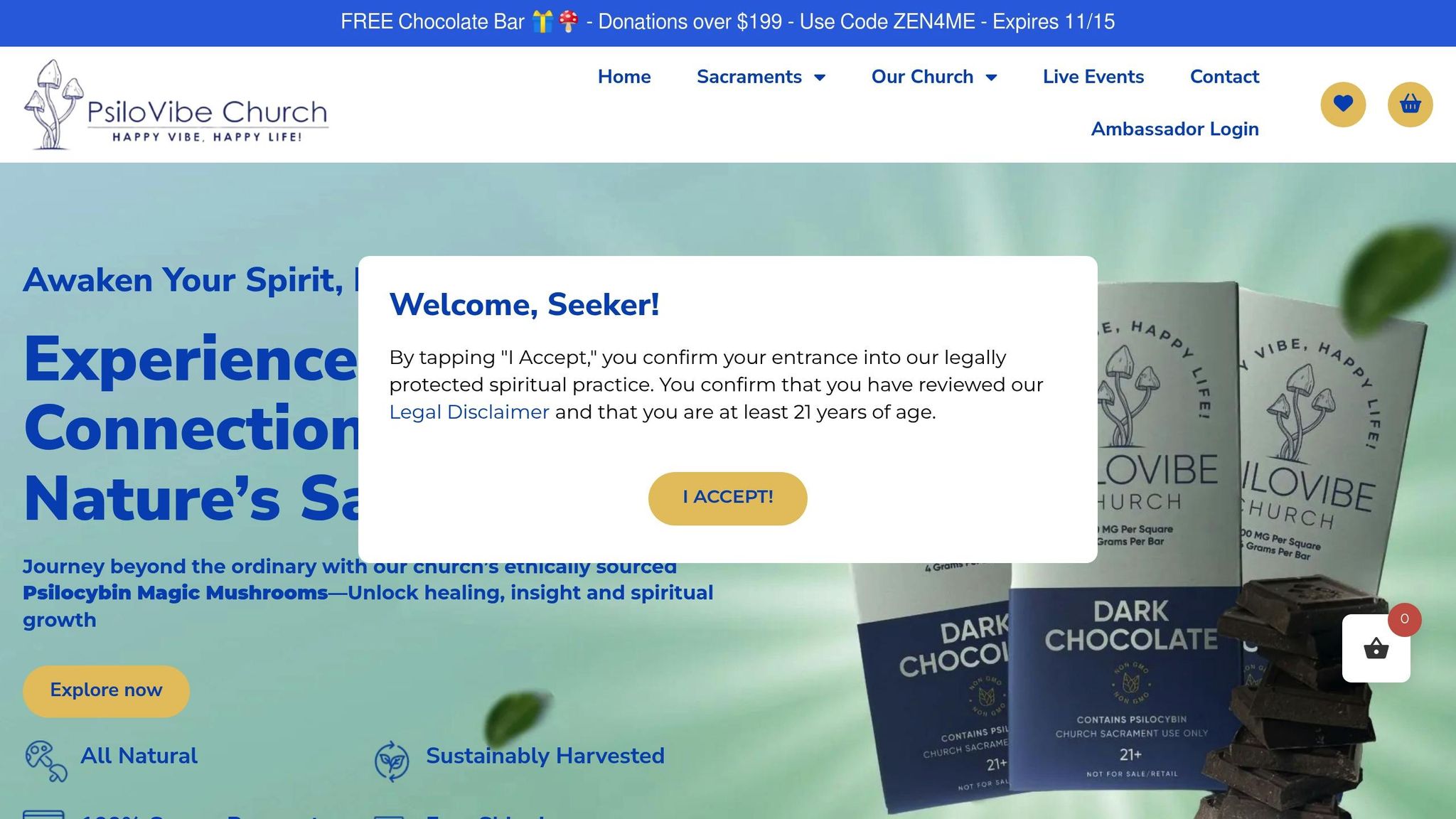
PsiloVibe Church is one example of how ancient traditions are being integrated into modern practices. The church blends Mazatec principles with contemporary access to psilocybin, presenting it as a "sacrament" and a "divine gift from nature" meant to foster spiritual growth, healing, and connection – values deeply rooted in traditional practices.
The church emphasizes intentional and ceremonial use of psilocybin, ensuring that each experience is guided by prayers, chants, and meditative practices. Their offerings include:
- Psilocybin Capsules: Options like the 100mg MicroCap Ceremony ($55.00) and the 400mg MacroDose Ceremony ($110.00)
- Psilocybin Chocolates: Ceremonial-grade chocolates with 10 squares, priced at $50.00 (400mg per square)
- Psilocybin Gummies: Each gummy contains 350mg, available for $50.00
- Magic Mushroom Teas and Whole Mushrooms: For those who prefer traditional preparation methods
- Trust Pack Ceremony: A 2-week supply designed for a 4 days on/3 days off dosing protocol, priced at $28.00
Operating under legal protections for religious practices, such as the Religious Freedom Restoration Act, PsiloVibe Church ensures that these ceremonies remain sacred while being accessible in modern society.
In addition to providing these offerings, the church prioritizes education and responsible use. By offering clear dosage guidelines, safe environments, and insights into the traditions behind these practices, they help prevent misuse and commercialization. This approach aligns with the core values of Mazatec shamanism, ensuring that healing, mindfulness, and spiritual growth remain central, allowing participants to experience profound emotional healing and expanded awareness.
Conclusion: Preserving the Sacred Nature of Mazatec Traditions
Since its introduction to the West in the mid-20th century, Mazatec wisdom continues to offer profound lessons, particularly as global interest in psilocybin mushrooms grows.
In Mazatec tradition, psilocybin mushrooms are seen as living spiritual beings – not just chemical compounds or recreational tools. This perspective emphasizes respect, reciprocity, and mindful, seasonal harvesting to maintain a balanced and meaningful relationship with these sacred medicines.
María Sabina’s experiences serve as a stark warning of what happens when sacred rituals are commodified. She saw firsthand how commercialization stripped mushroom ceremonies of their transformative essence.
Today, these traditions face serious challenges. Psychedelic tourism, cultural appropriation, and overharvesting threaten the ecological systems and spiritual practices tied to psilocybin mushrooms. Despite these pressures, there are ways forward that honor both the past and the present.
Organizations like PsiloVibe Church are exploring how Mazatec principles can be respected in a modern context. By prioritizing ethically sourced and sustainably harvested mushrooms, preserving ritual practices through prayers and ceremonies, and treating psilocybin as a sacrament rather than a commodity, they create a bridge between ancient traditions and contemporary spiritual needs.
To support these efforts, it’s crucial to back indigenous-led initiatives and ethical practices. This includes avoiding exploitative tourism, advocating for fair recognition and compensation of Mazatec intellectual property, and engaging with psilocybin in respectful, ceremonial contexts guided by those deeply rooted in these traditions. By taking these steps, we can help ensure that the sacred nature of Mazatec wisdom endures for generations to come.
FAQs
What is a velada ceremony, and how do Mazatec shamans use psilocybin mushrooms during it?
The velada ceremony is a deeply spiritual ritual practiced by Mazatec shamans to connect with higher realms and seek healing or guidance. At the heart of this tradition are psilocybin mushrooms, revered as sacred tools for spiritual exploration. Shamans approach the ceremony with great care, preparing themselves through fasting, prayer, and the creation of a safe and sacred space. These ceremonies often take place at night, a time believed to enhance the depth of the spiritual experience.
During the velada, participants consume psilocybin mushrooms under the careful guidance of the shaman. The experience is accompanied by chants, prayers, and rituals that encourage reflection and healing. This practice is built on profound respect for the mushrooms’ spiritual significance, with the ceremony aimed at fostering mindfulness, emotional insight, and personal transformation.
What ethical issues arise from the commercialization and tourism of Mazatec mushroom ceremonies?
The growing commercialization and tourism surrounding Mazatec mushroom ceremonies bring up important ethical questions, especially when it comes to preserving the integrity of indigenous traditions. For the Mazatec people, these ceremonies carry profound spiritual and healing importance. Turning them into commodities risks stripping them of their deeper meaning and reducing sacred practices to mere profit-driven attractions.
On top of that, increased tourism can create challenges for local communities. It can strain resources and lead to the distortion or even misrepresentation of these practices. Approaching such traditions requires sensitivity, respect, and a sincere effort to honor their origins and significance.
How can we honor Mazatec traditions while incorporating them into modern spiritual practices?
Respecting Mazatec traditions means recognizing the deep spiritual and cultural importance of their practices. For generations, the Mazatec people have regarded psilocybin mushrooms as sacred tools for healing, self-reflection, and connecting with the divine. Integrating these traditions into modern practices calls for maintaining the same reverence, using psilocybin with mindfulness and intention to support spiritual growth and personal healing.
PsiloVibe Church embraces this approach by offering psilocybin-based spiritual sacraments, including capsules, teas, chocolates, and gummies. These thoughtfully crafted offerings aim to encourage healing and self-awareness while honoring the sacred traditions that inspire their use.