
The Mazatec people of Oaxaca, Mexico, have used psilocybin mushrooms (ndi xijtho) in healing and spiritual ceremonies for centuries. These sacred rituals, called veladas, are led by shamans (curanderos) and involve prayer, chanting, and symbolic offerings to create a space for healing and spiritual connection. Unlike recreational use, the mushrooms are treated as conscious, sacred entities used for diagnosing illness, retrieving lost parts of the soul, and seeking guidance.
In the mid-20th century, these practices gained global attention through María Sabina, a Mazatec healer, and have since influenced both modern psilocybin therapy and spiritual practices. However, the commercialization of these traditions has raised concerns about the loss of their deeper meaning. Today, organizations like PsiloVibe Church attempt to honor these roots while offering psilocybin ceremonies in contemporary contexts, though key differences remain in intent, structure, and accessibility.
Key points:
- Psilocybin mushrooms are sacred tools in Mazatec ceremonies, not recreational substances.
- Veladas involve strict preparation, ritual tools, and spiritual practices aimed at healing.
- Modern psilocybin use often diverges from these original practices, emphasizing accessibility and personal growth.
- Protecting Mazatec traditions requires respect, education, and support for indigenous communities.
Understanding the origins and respecting the sacred nature of these ceremonies is vital for anyone engaging with psilocybin practices today.
Maria Sabína – Mushroom Ceremony Of The Mazatec Indians Of Mexico [Full Album · 1957]
Core Components of Mazatec Psilocybin Ceremonies
The Mazatec psilocybin ceremonies are deeply rooted in their pursuit of harmony and spiritual connection, reflecting their rich shamanic traditions. At the center of these practices lies the velada, a sacred ceremony that begins at dusk and continues until dawn, creating a profound space for spiritual communication.
Structure and Flow of the Velada
The velada starts with the shaman, or chjota chijne, preparing the ritual space through prayer and purification. The shaman arranges the altar, known as the Yaa mixatse or "transparent table", which serves as the spiritual focal point and embodies Mazatec cosmology.
Once the space is ready, participants gather in silence. The shaman leads opening prayers and lights candles to invoke spiritual protection. As part of the preparation, copal incense is burned to cleanse the space and bless the psilocybin mushrooms. Each pair of mushrooms is passed through the sacred smoke before being distributed to participants.
The mushrooms are given in pairs, symbolizing the balance of masculine and feminine energies, a concept central to the ceremony. These "father and mother" pairs are carefully chosen to maintain spiritual harmony throughout the ritual.
As the psilocybin begins to take effect, the shaman enters a trance state to perform the core healing work. In this altered state, the shaman may diagnose illnesses, seek spiritual guidance, or even retrieve lost parts of participants’ souls. The ceremony concludes with offerings and closing prayers, ensuring continued spiritual protection.
Every aspect of the velada is enriched by sacred symbols and tools, which deepen the participants’ spiritual engagement.
Ritual Tools and Symbols
Sacred objects play a pivotal role in the velada, each carrying profound spiritual significance. The altar is often adorned with Catholic imagery, such as the Virgin Mary and saints, alongside indigenous symbols, reflecting the blending of spiritual traditions in Mazatec culture.
Candles provide light but also represent divine guidance, believed to attract benevolent spirits while keeping harmful influences at bay. Copal incense purifies the space and sanctifies the mushrooms, creating an atmosphere conducive to spiritual communication.
Other elements, including flowers, cocoa, tobacco, and aguardiente, further enhance the ritual. Flowers symbolize life and beauty; cocoa represents nourishment; tobacco acts as a protective herb; and aguardiente is offered to spiritual guardians as part of the ceremony.
The psilocybin mushrooms, referred to as ndi xijtho, are seen as divine messengers. They are not merely tools but are revered as conscious entities essential to the healing process. The shaman treats them with the utmost respect, viewing them as integral to the spiritual journey.
The auditory aspect of the velada is equally significant. During the ceremony, the shaman uses poetic and metaphorical language to convey complex spiritual ideas. For instance, time might be described as a "giant snake… that binds past, present, and future", illustrating the fluidity of existence. This ritual language not only guides the healing process but also strengthens the connection to the sacred.
Preparation and Behavioral Guidelines
Preparation is a crucial part of the velada, ensuring participants are physically, mentally, and spiritually ready for the ceremony. Four days before the ritual, participants follow strict protocols, including a specific diet that excludes pork, spicy foods, and alcohol to cleanse the body and mind. Sexual abstinence is also observed during this time and for four days after the ceremony, as sexual energy is believed to interfere with the spiritual work.
Post-ceremony practices are just as important. Participants continue to adhere to dietary and behavioral guidelines to preserve the spiritual benefits of the velada. Failing to follow these protocols is thought to attract negative influences, potentially undermining the healing process.
The mushrooms themselves are harvested with great care. Children collect them at dawn during a full moon, following precise methods to ensure their spiritual potency. Every step, from timing to handling, is designed to avoid bad omens and maintain their sacred properties.
These practices go beyond ritual – they reflect a holistic approach to spiritual preparation. The alignment of body, mind, and spirit is seen as essential for the ceremony’s success, emphasizing the interconnectedness of all aspects of the self in the healing process.
Spiritual and Healing Functions of Mazatec Ceremonies
Mazatec psilocybin ceremonies serve as profound spiritual practices aimed at addressing physical illnesses and deep emotional wounds by fostering a connection with sacred entities.
The Mushrooms as Sacred Entities
In Mazatec tradition, psilocybin mushrooms (ndi xijtho) hold a revered status as conscious beings capable of imparting wisdom and healing through the shaman. Often referred to as "the little ones that sprout" or "holy children", these mushrooms are seen not just as tools but as living entities with their own thoughts and abilities to communicate and heal. During ceremonies, the mushrooms are considered active collaborators, working alongside other supernatural forces tied to natural elements like hills, caves, and rivers.
This sacred relationship forms the foundation of the healing process within these ceremonies.
Therapeutic Goals of the Ceremony
Mazatec ceremonies aim to heal on several levels, addressing both spiritual and emotional imbalances. Through practices like soul retrieval and divination, shamans uncover the root causes of distress and guide participants toward emotional recovery. Soul retrieval, in particular, involves the shaman entering a trance to recover and reintegrate lost pieces of the soul – fragments often displaced by trauma or illness – thereby restoring a sense of spiritual completeness.
The ceremonies also provide a safe and sacred space for participants to confront and release long-standing traumas. This approach acknowledges the interconnectedness of physical symptoms and deeper spiritual disharmony.
The shaman’s precise use of ritual language plays a crucial role in guiding and safeguarding this transformative process.
Role of Ritual Language and Chanting
Ritual language is a cornerstone of Mazatec healing practices, serving both as a bridge to the spiritual realm and as a protective force. The poetic verses spoken during ceremonies are believed to be the voice of sacred entities, channeled through the shaman to offer guidance and healing.
Chanting and rhythmic intonation are equally vital, as they help induce the trance states necessary for the shaman to explore deeper spiritual dimensions. These vocal techniques create a soundscape that enhances the sacred atmosphere, invites spiritual guardians, and establishes protective boundaries to ensure the ceremony remains a safe space for healing.
Mastery of this ritual language is a key element of a Mazatec shaman’s training, highlighting the critical role of skillful communication in conveying the wisdom of the mushrooms.
sbb-itb-a39e8e6
Preserving Mazatec Traditions in Modern Times
The sacred practices of Mazatec shamanism are at a crossroads, as global interest in psychedelics brings both opportunities and challenges. This growing attention creates a complex dynamic, blending the preservation of ancient rituals with modern spiritual exploration.
Training and Knowledge Transmission
Becoming a Mazatec shaman, or chjota chijne, isn’t just a decision – it’s a profound spiritual calling. Shamans are often chosen through dreams, mysterious illnesses, or spiritual inheritance. In some cases, the sacred mushrooms themselves are believed to select the individual. Existing shamans may also identify and guide those destined for this path.
The training process is anything but conventional. It’s a lifelong journey rooted in deep immersion, rigorous apprenticeship, and the mastery of sacred rituals and language. Unlike the structured approach of Western education, this knowledge is passed down directly through experience and participation.
Family plays a central role in preserving these traditions. Wisdom is handed down through generations, often beginning in childhood. For instance, María Sabina, one of the most well-known Mazatec healers, was introduced to mushroom ceremonies by her grandfather and great-grandfather. This early exposure shaped her into a revered curandera. However, with the rise of global interest, this intimate form of knowledge transfer now faces new challenges.
Protecting Traditions Amid Global Interest
While traditional training continues, Mazatec shamans now face the added pressure of navigating a global market eager for their sacred wisdom. Since the 1950s, Huautla de Jiménez has seen a surge in tourism, which has brought both opportunities and significant concerns. Elders warn that commercialization risks diluting the spiritual essence of their rituals, reducing them to mere spectacles for profit.
This commercialization is evident in the rise of tourist-focused mushroom ceremonies, the blending of traditional practices with New Age elements, and the sale of sacred items as commodities. Such trends not only threaten the authenticity of Mazatec traditions but also create divisions within the community and exploit both the people and their sacred plants. There have even been reports of sacred sites being disrespected or damaged by visitors, fueling local resentment.
In response, many Mazatec shamans have taken steps to protect their heritage. Some choose to keep the most sacred aspects of their rituals private, limiting them to community members or those with a genuine need. Others focus on educating outsiders, emphasizing the deep spiritual significance of their traditions and advocating for measures to protect their intellectual and spiritual heritage.
Authentic Mazatec ceremonies are deeply rooted in the needs of the community, guided by spiritual principles, and follow strict protocols. They are meant for healing or divination, not entertainment. Practices that lack this depth and are driven by profit are increasingly rejected by traditional shamans.
Efforts like the Mazatec Project aim to document and protect this knowledge, ensuring that it remains under the control of the community. Sacred sites – such as caves, hills, and rivers – are central to Mazatec cosmology, as they are believed to house supernatural beings essential for spiritual work. Any harm or disrespect to these sites is seen as a violation of Mother Earth (Nanangui).
The Mazatec story highlights the importance of maintaining community control over cultural knowledge, implementing ethical and legal protections, and educating outsiders. It’s a delicate balance between sharing their wisdom and preserving the sanctity and authenticity of their traditions.
Modern Applications of Psilocybin in Spiritual Practices
Modern psilocybin practices build on ancient traditions, merging age-old wisdom with contemporary spiritual approaches. Inspired by the Mazatec veladas, these updated practices aim to provide healing and spiritual growth while honoring the roots of psilocybin use.
Sacramental Offerings by PsiloVibe Church
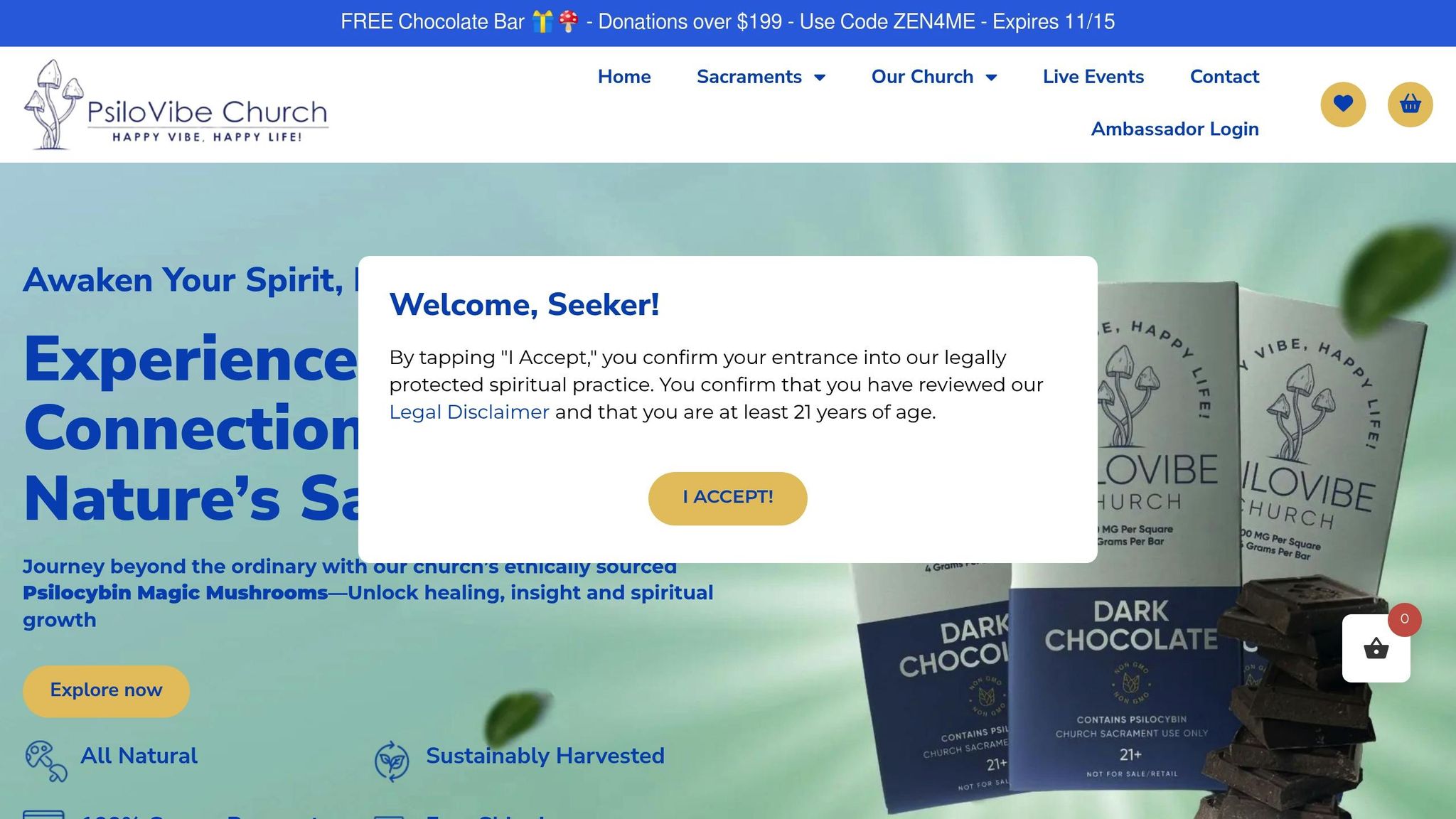
PsiloVibe Church brings the spiritual essence of psilocybin into a modern U.S. framework. Operating under legal protections, the church offers psilocybin and N,N-DMT as sacraments, emphasizing their use as tools for deepening connections with the universe, the self, and the divine.
Their offerings adapt traditional practices into more accessible formats:
- Psilocybin Capsules: Microdoses of 100 mg for $55.00 and macrodoses of 400 mg for $110.00.
- Psilocybin-Infused Chocolates: Ten squares, each containing 400 mg, for $50.00.
- Psilocybin Gummies: Each gummy contains 350 mg, priced at $50.00.
- Trust Pack Ceremony: A two-week supply following a structured dosing protocol (four days on, three days off) for $28.00.
- N,N-DMT Products: Vape cartridges with 1 gram of DMT, designed for 50–60 uses, priced at $149.00.
These products are used in structured ceremonies that incorporate prayer, chanting, and meditation. While adapting to modern needs, PsiloVibe Church retains core ceremonial elements, blending ancient traditions with mindfulness and personal growth.
Mazatec vs. Modern Psilocybin Practices
Modern psilocybin ceremonies differ significantly from traditional Mazatec veladas. Here’s a comparison of key aspects:
| Aspect | Mazatec Ceremonies | Modern U.S. Practices (e.g., PsiloVibe Church) |
|---|---|---|
| Leadership | Trained shaman (chjota chijne) | Facilitator, guide, or spiritual leader |
| Setting | Nocturnal, sacred space, ritual table | Group, individual, online, or in-person |
| Ritual Elements | Candles, copal, icons, chanting | Music, meditation, integration circles |
| Mushroom Form | Fresh, paired mushrooms | Capsules, chocolates, teas, gummies, whole mushrooms |
| Spiritual Framework | Indigenous cosmology, Catholic syncretism | Mindfulness, wellness, spiritual but not religious |
| Accessibility | Local, often secretive, seasonal | Widely available, year-round, online ordering |
| Intention | Healing, divination, spiritual guidance | Healing, self-discovery, personal growth |
| Language | Ritual Mazatec, poetic, symbolic | English, modern spiritual language |
Modern ceremonies often integrate elements from diverse spiritual traditions, making them accessible to broader audiences, including those unfamiliar with indigenous practices. While traditional veladas are deeply personalized and guided by a shaman’s expertise, contemporary ceremonies often feature standardized formats with fixed dosages and structured integration processes.
Ethical and Responsible Use
The modern use of psilocybin comes with ethical responsibilities. Practitioners must avoid cultural appropriation by recognizing the origins of psilocybin use and respecting the cultural and spiritual significance of Mazatec traditions.
A key focus of modern protocols is ensuring safe and meaningful experiences. This includes screening participants for mental health conditions, providing experienced facilitation, and offering integration support afterward. PsiloVibe Church, for instance, emphasizes proper dosing and advises individuals with certain mental health conditions to consult medical professionals before participating.
Supporting indigenous communities is another critical aspect. This involves contributing to initiatives that preserve Mazatec traditions and advocating for legal protections for traditional knowledge. Transparency about the sources of materials and practices, along with efforts to honor traditional protocols, helps maintain the sacred nature of these practices.
The legal landscape adds further complexity. While organizations like PsiloVibe Church operate under statutes such as the Religious Freedom Restoration Act, psilocybin’s legal status varies widely across the U.S. As of 2024, the U.S. psychedelic market – including both legal and underground services – was valued at $2.4 billion, with rapid growth expected as decriminalization and medical applications expand. A 2023 Pew Research Center survey revealed that 17% of U.S. adults have used psychedelics at least once. Balancing accessibility with authenticity remains a significant challenge as the field evolves.
Conclusion: Honoring Tradition While Embracing Modern Practices
Exploring Mazatec shamanism reveals a powerful truth: traditions can adapt to modern times without losing their core spirit. As psilocybin gains recognition in spiritual and therapeutic spaces, the wisdom of the Mazatec people provides a vital blueprint for ensuring these practices remain rooted in authenticity and respect.
The velada ceremony reminds us that psilocybin mushrooms are not just chemical substances – they are sacred beings that deserve reverence and a proper ceremonial setting. This tradition highlights the importance of ritual structure, intentional preparation, and spiritual guidance, which are as essential today as they have been for centuries.
This sacred framework can bridge traditional and modern approaches. For instance, organizations like PsiloVibe Church integrate traditional elements into contemporary settings, offering ceremonies that combine prayer, meditation, and ritual with a clear focus on healing and connection.
Ethically, anyone engaging with psilocybin has a responsibility to honor its indigenous roots and support the communities that have safeguarded these traditions. This goes beyond simply adopting rituals – it requires a deeper commitment to understanding, reciprocity, and respect.
María Sabina, who introduced psilocybin ceremonies to Western audiences, later expressed regret over the commercialization of these sacred traditions.
Her story stands as a cautionary tale against reducing spiritual practices to commodities. With the psilocybin market projected to reach $6.85 billion by 2027, there’s a clear risk of commodification. Growth in this field must be guided by a commitment to preserving the spiritual and cultural depth that makes these practices transformative.
Practical steps for ethical engagement include learning about Mazatec history and spirituality, working with skilled facilitators, and approaching ceremonies with genuine healing intentions rather than as entertainment. Supporting efforts led by indigenous communities and advocating for legal protections of traditional knowledge are equally crucial.
The future of psilocybin spirituality depends on our ability to respect its origins while thoughtfully integrating it into modern contexts. By preserving the reverence, ritual, and healing focus of Mazatec traditions, today’s practitioners can create meaningful experiences that promote both personal growth and collective wisdom. The sacred "holy children" call on us to receive their gifts with humility and gratitude.
FAQs
What makes Mazatec psilocybin ceremonies unique compared to modern practices?
Mazatec psilocybin ceremonies are deeply intertwined with indigenous traditions, centering on spiritual healing and a sense of connection. These rituals are typically conducted in a sacred environment under the guidance of a shaman. The shaman plays a pivotal role, using prayer, chants, and intentional practices to help participants navigate their journeys. In this context, the mushrooms are revered as sacred tools, offering a pathway to connect with the divine and address both personal and communal challenges.
On the other hand, modern psilocybin practices cover a broad spectrum, ranging from clinical and therapeutic settings to recreational use. While some contemporary approaches may include spiritual elements, they often lack the cultural depth and ceremonial structure that are hallmarks of Mazatec traditions. These indigenous practices are deeply rooted in a profound respect for the mushrooms as sacred medicine, a perspective that is not always present in modern interpretations.
How is the authenticity of Mazatec shamanic traditions being preserved amidst growing commercialization?
Mazatec shamanic traditions, known for their deep connection to healing and spirituality through psilocybin ceremonies, are encountering new challenges as global interest in these practices expands. Preserving the essence of these traditions often requires a focus on respecting indigenous knowledge, ensuring ceremonies are led by experienced practitioners, and encouraging participants to develop a genuine understanding of the cultural roots behind these rituals.
Organizations like PsiloVibe Church work to honor these sacred traditions by advocating for the mindful and respectful use of psilocybin. They emphasize its role in healing and spiritual growth while maintaining a strong connection to the cultural origins of these practices. By combining education with intentional approaches, they aim to protect the integrity of these ancient ceremonies while thoughtfully integrating them into the modern world.
How can I honor Mazatec traditions when participating in psilocybin practices?
Honoring the traditions of the Mazatec people while engaging in psilocybin practices calls for deep respect, mindfulness, and an awareness of their cultural heritage. For generations, the Mazatec community has regarded psilocybin mushrooms as sacred, using them in ceremonies aimed at healing and fostering spiritual connection. These rituals are steeped in reverence and carry profound significance.
If you wish to participate in such practices respectfully, it’s essential to learn about their traditions, steer clear of cultural appropriation, and approach the experience with humility and sincere gratitude. Organizations like PsiloVibe Church highlight the sacred role of psilocybin, offering spiritual ceremonies that focus on healing, self-awareness, and personal transformation, all while honoring these guiding principles.